
How to build your own Ubuntu Core image and other documentation add-on

David Callé
on 21 November 2016
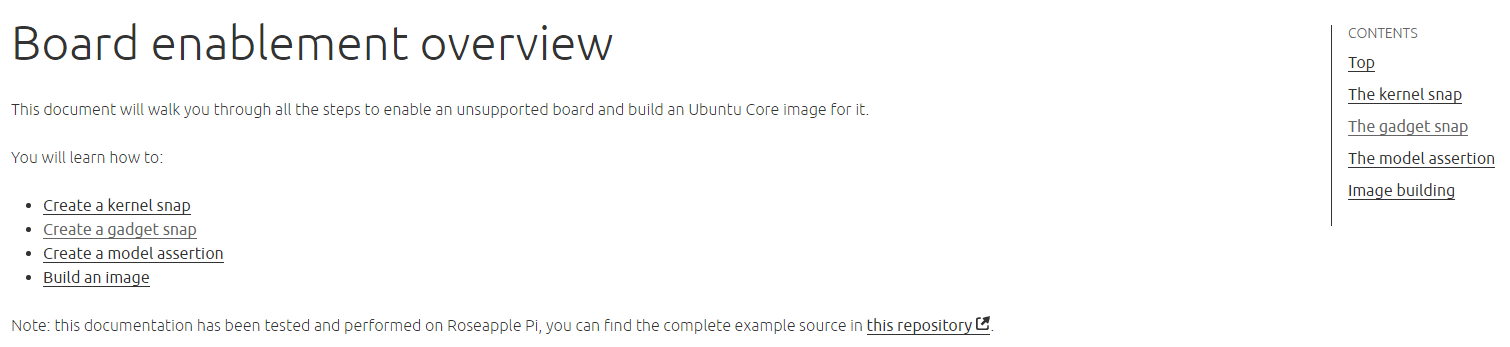
2 weeks since the launch of Ubuntu Core 16! Many of you have been asking for help porting Ubuntu Core to new boards, chips or simply building your own images for supported boards like the Raspberry Pi. Wait no more!! Here is the first piece of documentation to help you build an Ubuntu Core image for your preferred board.
New documentation
The new Board enablement documentation gives a set of instructions for advanced users to help them enable new boards and build images, including kernel building, gadget snap composition, signature generation and model assertion creation.
The latest new interfaces have been added to the core interfaces reference:
- `raw-usb` allowing access to connected USB devices
- `lxd`, allowing usage of the LXD API through the LXD snap
Updates
The Security and sandboxing overview has been augmented with debugging guidance to investigate which authorizations your apps need to request to work within security confinement.
Improved looks
The doc interface also got a few enhancements, with an in-page navigation menu on the right hand side which will help navigate through long pages (and yes there are a few long pages 🙂 .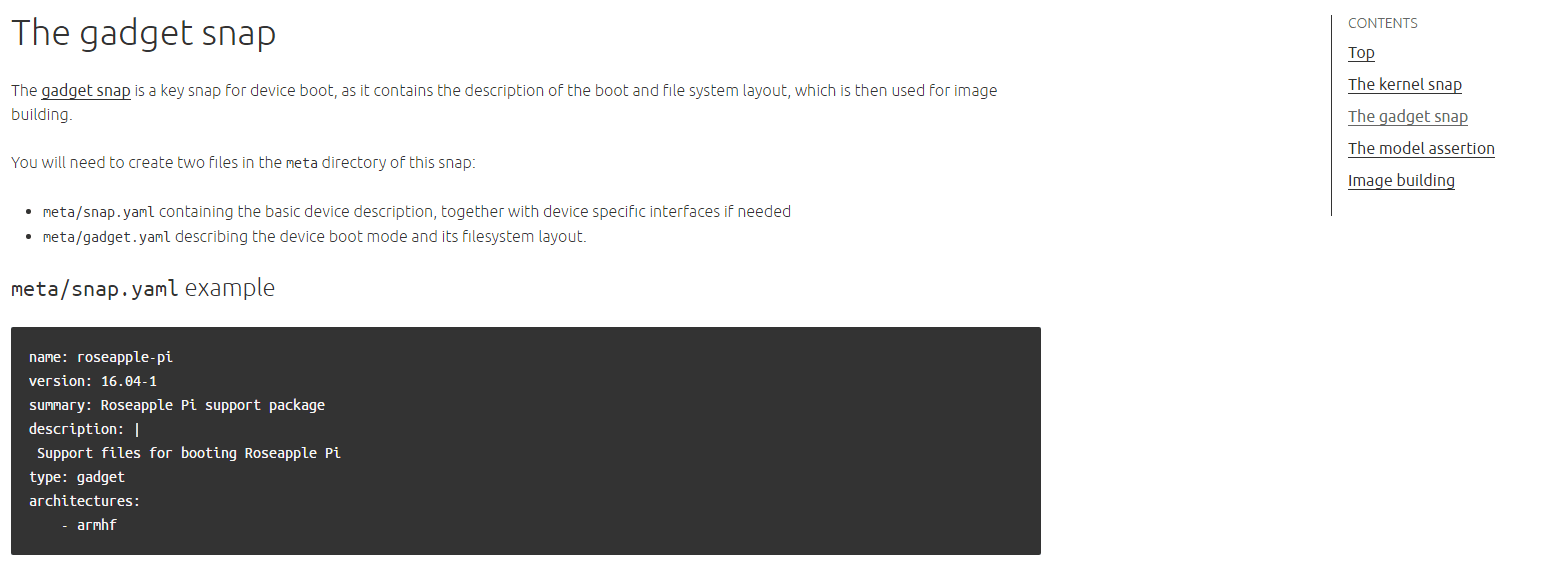
Talk to us today
Interested in running Ubuntu in your organisation?
Newsletter signup
Related posts
Finding the blind spot: How Canonical hunts logic flaws with AI
AI is accelerating and improving how security engineers find and fix vulnerabilities. A new tool developed and used at Canonical, called Redhound, has already...
Fragnesia Linux kernel local privilege escalation vulnerability mitigations
A local privilege escalation (LPE) vulnerability affecting the Linux kernel has been publicly disclosed on May 13, 2026. The vulnerability does not have a CVE...
Rethinking BYOD security: protecting data without trusting devices
BYOD (bring your own device) has always looked better on paper than it does in real life. The promise is clear: let people use the gadgets they already own....